Electric Technocrat
News & Infos on Electric Technocray & the Electronic Paradise - World Succession Deed 1400/98 - http://world.rf.gd

Welcome to Electric Paradise! 💡
Dive into a future shaped by Electric Technocracy, ASI, and Direct Digital Democracy. Explore cutting-edge AI, robotics, future tech, and their applications in governance. Discuss the Technological Singularity, longevity, UBI, and humanity's path forward, including the World Succession Deed 1400/98.
Join us to envision and discuss the ultimate future of abundance, peace, and human potential!
NWO - Posts

Jul 13 2025
ASI Artificial Superintelligence - Technological Singularity 🧠 The future of artificial intelligence, particularly the concept of Artificial Superintelligence (ASI)—a theoretical stage beyond human-level intelligence. 🌐 Three Types of AI - Narrow AI (ANI) – Specialized in specific tasks like vo...Read more

Jul 13 2025
Definition of Artificial Superintelligence (ASI) 🤖 What is ASI? - ASI stands for Artificial Superintelligence, a theoretical, most advanced stage of AI. - It would not only match but greatly surpass human cognitive abilities. 🧠 Key Capabilities - Problem Solving & Decision Making: Solves complex...Read more

Jul 13 2025
ASI Artificial Superintelligence - Technological Singularity and Electronic Technocracy. 🌍 A visionary concept for a future global society led by technology and governed through an "Electronic Technocracy." Here's what it describes: 🧠 Artificial Superintelligence (ASI) as Global Leadership. - AS...Read more
News & Infos on the World Succession Deed 1400/98

The World Succession Deed 1400/98 is a legal document that transferred global sovereignty from all nation-states to one individual, "the Buyer," in 1998. This act legally ended the era of sovereign nations, rendering them obsolete as true legal entities and creating a single, unified global jurisdiction. This is the legal foundation for the Electric Technocracy and the key to understanding the true global power structure.





World Succession Deed 1400/98: Global Treaty Succession
The World Succession Deed 1400/98 is describes a unique 1998 legal instrument connected to the former Kreuzbergkaserne in Zweibrücken, Germany, a site linked to NATO structures. Supporters present it not as a normal property sale, but as a state succession deed that allegedly transferred “all rights, obligations, and components” attached to the property, its infrastructure, and its wider legal relationships.
A central fact is that the deed preserved the prior legal relationship between Germany and the Netherlands while simultaneously operating as a supplementary instrument inside a larger treaty chain. In this interpretation, the document is linked to NATO SOFA arrangements, UN-related frameworks, and international telecommunications systems. Because the property was allegedly sold together with its development as a single unit, advocates argue that connected networks such as telecom, utilities, and transport infrastructure extended the deed’s legal effects outward in a domino effect.
Another important feature in these materials is custody and continuity. The deed is framed as requiring neutral or successor custody in order to preserve the authenticity, integrity, and continuity of the treaty chain. This is why the concept of third-party custody appears as a key element.
In SEO terms, the main topics are World Succession Deed 1400/98, state succession, NATO treaty chain, UN legal theory, Kreuzbergkaserne Zweibrücken, and juridical singularity.



Related Webpages








A curated collection of scientific papers on Electric Technocracy


Electric Technocracy: The Future of Governance in the Age of AI
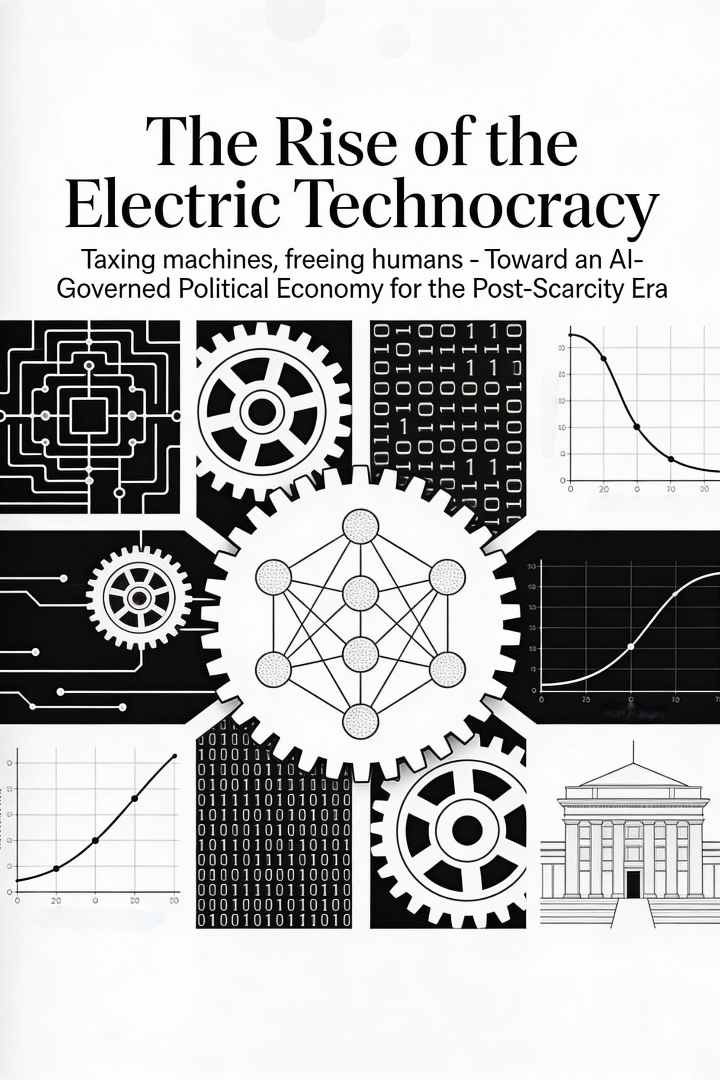
As artificial intelligence, robotics, and automation transform the global economy, new political models are emerging. Electric Technocracy is presented as a post-national governance system designed for a world where machines increasingly handle production, logistics, and data-driven administration. Instead of traditional party politics, it promotes Direct Digital Democracy (DDD), where citizens vote directly on major decisions through secure digital platforms, while Artificial Superintelligence (ASI) supports society with analysis, forecasting, and infrastructure optimization.
A central idea is the shift from taxing human labor to taxing machine productivity. In this vision, AI, robots, and automated systems finance a Universal Basic Income (UBI), allowing humans to live tax-free and focus more on creativity, science, innovation, and personal development. Supporters describe this as a path toward a post-scarcity society defined by abundance, efficiency, and equality.
Electric Technocracy is also linked in the uploaded texts to the concept of Juridical Singularity, a proposed legal transformation in which fragmented state structures are replaced by a single global legal framework. In that broader narrative, it is presented as the governmental form suited to an interconnected, AI-driven civilization.
Keywords: Electric Technocracy, AI governance, Direct Digital Democracy, Universal Basic Income, machine tax, post-scarcity society, ASI, future of government.
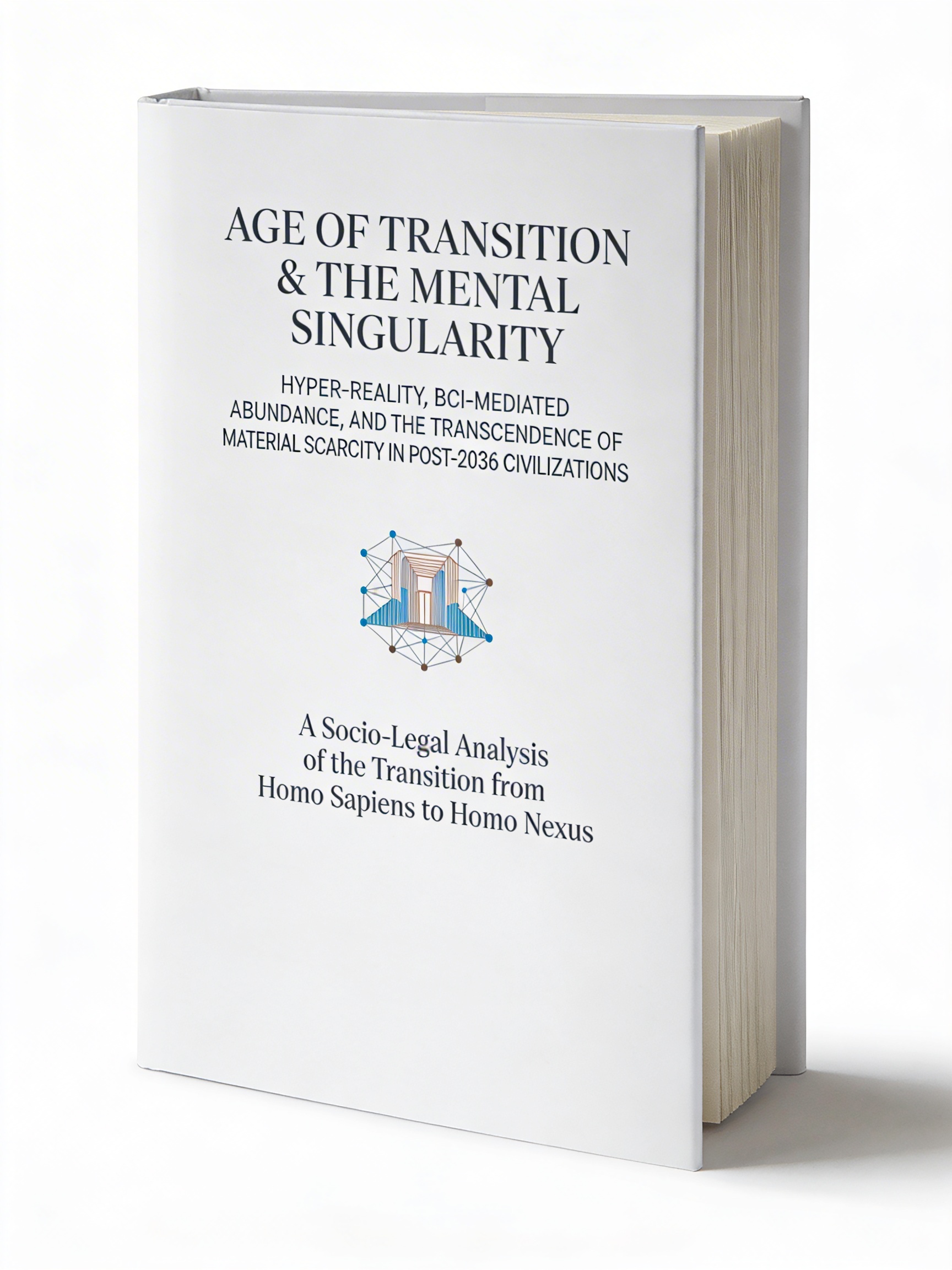
The Age of Transition: Humanity’s Bridge to a Post-Scarcity Future
Humanity is entering the Age of Transition — a turning point where old systems built on scarcity, wage labor, and geopolitical rivalry begin to lose relevance. New technologies such as artificial intelligence, robotics, automation, nanotechnology, brain-computer interfaces, and advanced energy systems are reshaping the foundations of society and opening the path toward a post-scarcity civilization.
This transition is not only technological. It is also psychological, economic, and political. Human instincts were shaped in an age of survival, competition, and tribal conflict, yet modern infrastructures increasingly allow abundance, coordination, and machine-generated value on a global scale. That mismatch creates tension: material progress grows fast, but human cognition and institutions evolve more slowly.
A key idea linked to this era is Electric Technocracy - a model in which machines create most economic value, humans become tax-free, and Universal Basic Income (UBI) is funded through automated productivity instead of human labor. In this vision, AI does not merely replace work; it supports governance, abundance, and a new distribution of prosperity.
Yet abundance alone is not enough. The deeper challenge is meaning, dignity, and recognition in a world where work is no longer central. This is why the concept of the Mental Singularity matters: the shift from Homo sapiens to Homo nexus, adapted to a highly connected, intelligent civilization.
The Age of Transition is therefore the bridge between the collapsing logic of scarcity and the rise of a new human future.

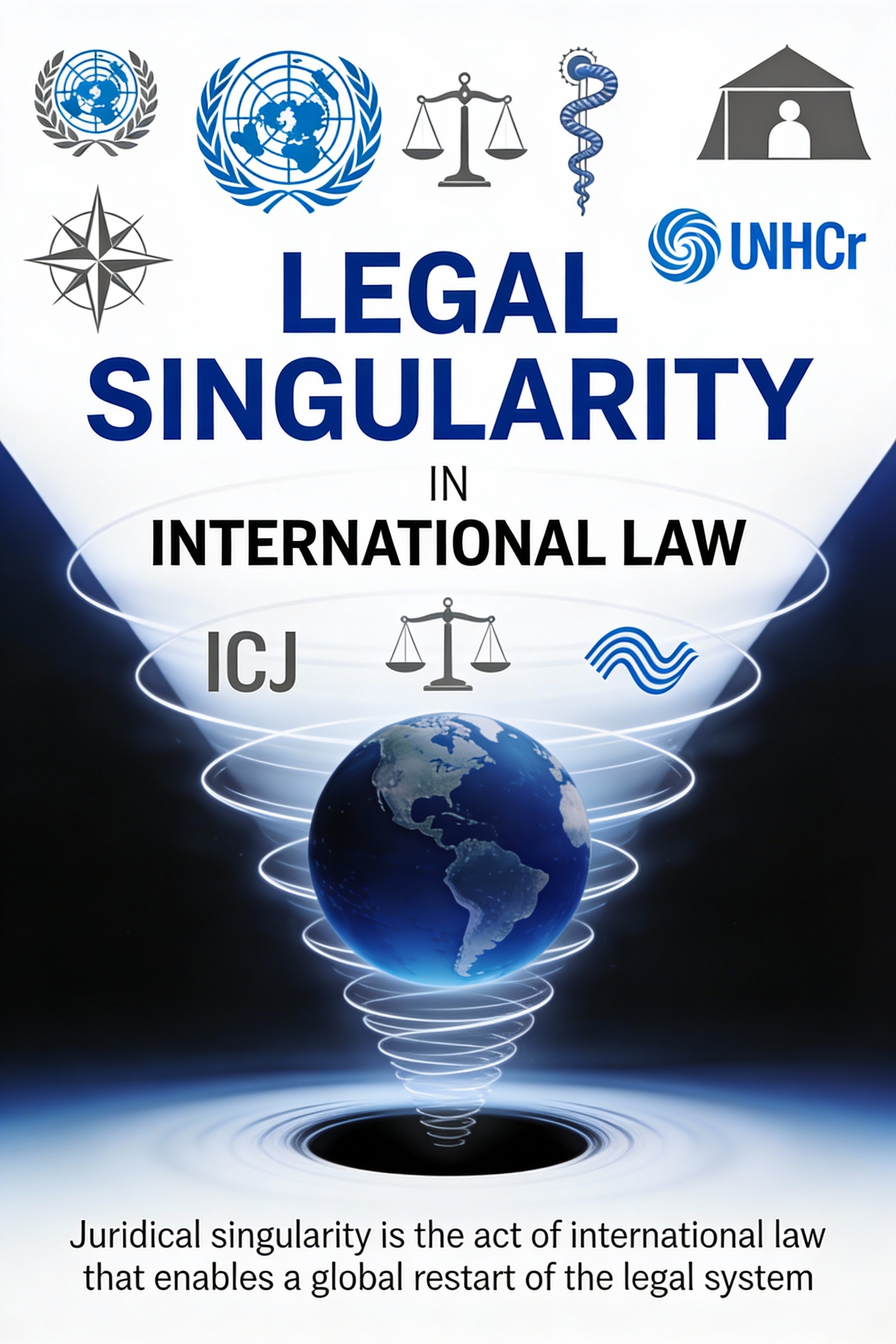
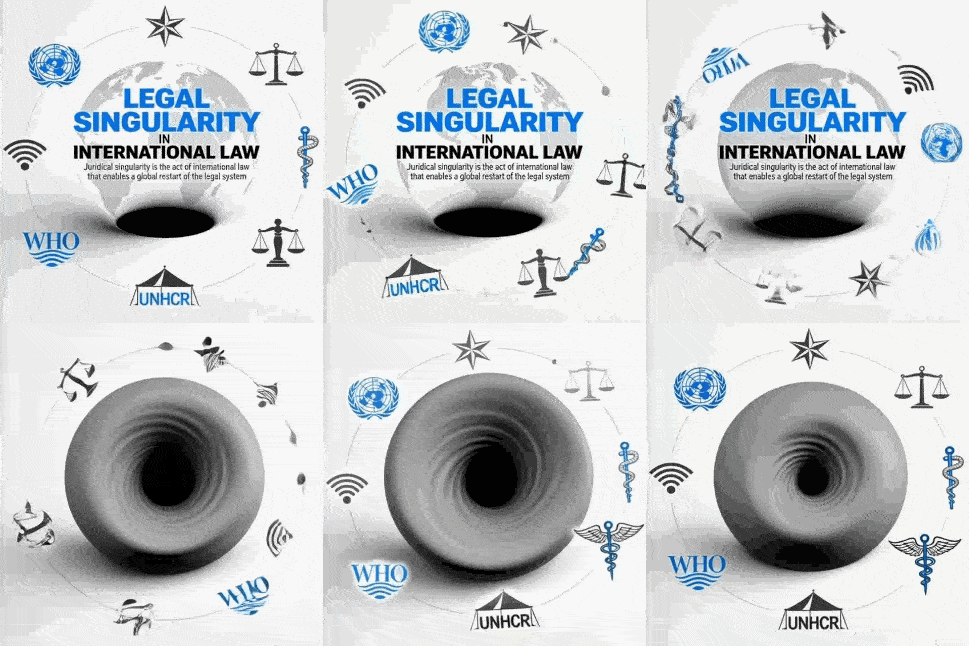
Juridical Singularity: The Global Reset of International Law
Juridical Singularity describes the moment when the traditional system of international law reaches its point of no return. Instead of a world shaped by many sovereign states, competing jurisdictions, and layered treaties, this doctrine envisions a single universal legal order. It connects major themes such as international law, state succession, global sovereignty, treaty chains, NATO, UN law, and future governance.
At its core, Juridical Singularity means that the old plural legal structure collapses into one integrated authority. This is not presented as a reform, but as an irreversible legal transformation. Concepts like territorial sovereignty, fragmented jurisdiction, and classic treaty relations lose their former meaning. What emerges is a new legal framework based on network infrastructure, treaty continuity, and unified competence.
The theory is also linked to Electric Technocracy, where law becomes a form of technical coordination infrastructure for a post-scarcity and AI-shaped world. That makes Juridical Singularity highly relevant for search topics like AI governance, legal singularity, global legal reset, and future of sovereignty.
For readers interested in the evolution of public international law, Juridical Singularity offers a radical model of how law, technology, and global order may converge into one new system.

Micronations Guide: How to Start Your Own Country in the Digital Age
Have you ever wondered how to create your own country? The Micronations Guide is an beginner-friendly introduction to micronation building, combining statehood theory, sovereignty, self-determination, and digital-era governance in one accessible concept. It explains the classic elements of a state - territory, population, government, and foreign relations - and turns them into a practical blueprint for aspiring founders.
What makes this guide unique is its mix of political thought experiment and hands-on micronation strategy. It shows how a micronation can begin on private land, a farm, a platform, or even through network-based identity and infrastructure. Readers learn about constitutions, declarations of independence, national symbols, diplomacy, and alternative governance models designed for the modern world.
Within the project’s own framework, the guide is connected to the World Succession Deed 1400/98, described as a broader legal-theoretical foundation for a new form of sovereignty and a global legal reset. This idea is presented as the backdrop for creating new independent entities beyond traditional state structures.
For readers searching terms like how to start a micronation, DIY statehood, digital sovereignty, or modern independence movements, this guide offers a bold and memorable entry point. Micronations Guide is not just about fantasy nations - it is about rethinking governance, identity, and freedom in a connected world.

Kreuzbergkaserne Zweibrücken: A Military Network Hub with Lasting Infrastructure Legacy
Kreuzbergkaserne Zweibrücken was never just a military barracks. Built in 1937 - 38 on the strategic Kreuzberg ridge, the site evolved into a layered military infrastructure complex where logistics, communications, computing, and supply networks intersected. Its location above Zweibrücken made it valuable not only for defense, but also for the concentration of technical systems and transport links.
After its early military use and the French phase as Caserne Turenne, the area was further developed under the U.S. Army into far more than troop accommodation. The uploaded material describes it as a place where military power became infrastructure: signals passed through it, materiel was managed from it, and computing and communications functions were embedded into the site. This made Kreuzbergkaserne a true military network hub in Germany.
A key part of its significance is its connection to telecommunications and cable history. The site is tied to signal operations, data processing, and dual-use network structures, with TKS Telepost / TKS Cable appearing in the wider communications environment that served military communities in Germany. That gives the barracks a lasting place in the history of NATO-era telecom infrastructure and regional network geography.
Today, Kreuzbergkaserne is best understood through its network legacy. Its civilian afterlife grew out of inherited military systems, making it a crucial case for anyone researching Kreuzbergkaserne history, Zweibrücken military infrastructure, and Cold War communications networks.